Showing posts with label African-American history. Show all posts

Tuesday, May 4, 2010

How Florence Invented America

20. How Florence Invented America, by Giancarlo Masini

In case you've been wondering where the heck I've been, the answer is: Florence and Amsterdam. I spent several glorious days in Florence, and then on to Amsterdam, which was also tremendous fun, but, thanks to a volcano in Iceland, I was there longer than expected. So I have been playing catch up, at home and work, but now I think I'm back on track.

And I will begin by talking about some of the books that I read on my trip.

When I travel, I like to bring books that are in some way connected to the places to which I am going. In fact, I found this one at a used bookstore and bought it specifically to read for the trip.

When I first picked it up, I thought it would be a lot of puffery and braggadoccio, but it was actually quite interesting. It's about Amerigo Vespucci, Giovanni Verazzano and Filippo Mazzei. It was particularly interesting to compare Vespucci and Verazzano's explorations, and their reactions to the native people they encountered.

I learned much more about Vespucci than I had known. We are told in school, "he was a mapmaker and so America got named after him." But that's a real distortion, because he was actually the first European "discoverer" of South America. Verazzano was the first European to set foot in Manhattan. There's a stone from the family castle enclosed in a wall of the Verrazzano Bridge.

Mazzei was trained as a doctor, and practiced in a wide variety of places, including Smyrna and London, but eventually headed to America, where his agricultural and ideological interests brought him into contact with, among others, Thomas Jefferson, whose good friend he became. His philosophical exchanges with our Founding Fathers influenced the War of Independence and, later, the U.S. Constitution. Eventually, he was involved with both French and Polish progressive movements.

These men may not have "invented" America, but they were certainly in at the "creation", so to speak!

Tuesday, June 30, 2009

State of Jones

46. The State of Jones: the Small Southern County that Seceded from the Confederacy, by Sally Jenkins and John Stauffer

There is a part of the history of the American Civil War that is not very well-known, that is rarely taught in the schools. It is the story of southerners who believed in the Union, who not only refused to fight for the Confederacy, but actively fought against it. Some did so by joining the Union forces, others did so by engaging in guerrilla warfare. The rural county of Jones in Mississippi was a stronghold of men who opposed secession. Some were staunch Unionists. Some were anti-slavery. Some believed it was a rich man's war and a poor man's fight. One such man was Newton Knight, and this is his story.

Newton Knight was the grandson of Jackie Knight, one of the early settlers in this part of Mississippi. By the time war came, he was "merely a rich man in a state full of tycoons", but the owner of several hundred acres of cotton and rice, and of a couple of dozen slaves. But his son, Albert, Newton's father, unlike Jackie's other children, refused to own any slaves, and led a modest life as a shoemaker and tanner. This split in the family would echo down through the years and the generations.

When the Civil War began, Newton, like many others, was forced into service in the Confederate Army. After Vicksburg, he, like many others, deserted. He spent the rest of the war with a band of like-minded souls, fighting the Confederacy in Jones County. The book does not, however, end with Lee's surrender, because the war really didn't end there. There was a period when men like Knight were in the ascendancy, when it looked as though the Union had won the war. But it soon became apparent that, in Mississippi at least, the South had won. National politics meant that the federal government soon declined to enforce the rule of law, and ex-Confederates came to power through murder and intimidation at the polls, leaving a legacy of racial injustice that still haunts this country today.

There's another part of Newton's story that's told here, the story of his love for a black woman, a woman named Rachel who was owned by his grandfather. Newton was married to a woman named Serena, by whom he had several children, but he also had children by Rachel. Now, it wasn't unusual for a white man to have children by a slave woman. What was unusual was that theirs was a true consensual relationship. He viewed her as his wife (the authors suggest that later conversions of some members of the family to Mormonism might have been caused, at least in part, by that faith's then recognition of plural marriage), he recognized and helped to raise and support his children by her, he made sure she had financial independence.

One would like to know what it was that caused Albert (and, through him, his children) to be not only opposed to slavery, but a friend to African-Americans. I cannot, however, fault the authors for being unable to answer this question; it is, at this remove, likely unanswerable.

I was, for the most part, riveted by this book. If I have any quibble with it, it is that in the early part it jumps around a bit too much for my taste. However, the authors combine serious scholarship and research (among other things, they located and interviewed descendants of Knight) with good storytelling. Civil War buffs will appreciate the vivid descriptions of the battle of Corinth, the siege of Vicksburg, and the guerrilla bands. About the only folks who won't like this book are those who don't want their preconceived ideas about the south and the Confederacy disturbed.

(For another story of Union sympathizers in the South, this one fiction, I highly recommend Sharyn McCrumb's Ghost Riders, one of her "Ballad Series".)

Thursday, April 2, 2009

Passing Strange

22. Passing Strange: A Gilded Age Tale of Love and Deception Across the Color Line, by Martha A. Sandweiss

When Clarence King died in Phoenix, Arizona, in 1901, he was eulogized by friends like John Hay, private secretary to Abraham Lincoln and Secretary of State under McKinley and Theodore Roosevelt, and historian and memoirist Henry Adams. He was remembered as the first director of the United States Geological Survey, the man who exposed a diamond hoax that threatened the economy of the United States, a devoted son and confirmed bachelor.

He was all those things, except the last. The man who, in 1880, said that he had lost the only woman he had ever wanted to marry through too much attention to duty, in 1888 married a woman so far outside his social circle and standing that he did so under a false name, a false occupation, a false identity and a false race. For Clarence King, son of a prosperous China trader, interlocutor of Ruskin and Turner, guest at the White House, had fallen in love with Ada Copeland, an African-American woman born into slavery. He courted her under the name "James Todd", and told her he was a Pullman porter, a job which must mean that he, too, was African-American.

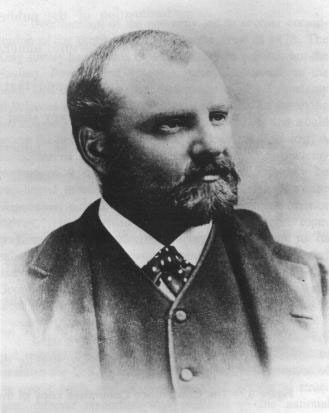
How this blond, blue-eyed man passed as black is more than a story of love and deception. It is the story of how this nation has interpreted race and how social and cultural assumptions translate into racial "certainties". It was interesting to compare how King used those assumptions to pass as black with way in which Belle da Costa Green used them to live as white (see An Illuminated Life). Although in some parts of the world distinctions were and are drawn between "white", "black" and mixed race ("colored", "mulatto" "mestizo"), in the world of Clarence King/James Todd any black ancestor made you black, no matter how you looked. At the same time, people took their cues about someone's race from their surroundings. So King, looking like this:


could be perceived as "black" simply because he was met in an African-American neighborhood, visited an African-American church, and claimed to be a Pullman porter, a job for which only African-Americans were hired. (Curiously, though, he was in fact a bit too light-skinned for that to be entirely credible, as light-skinned blacks were more likely to be dining-car attendants.) A census-taker would look at the "white"-appearing children of Ada and Clarence (James) and mark then as "black" upon seeing their mother. (In fact, their two daughters would eventually marry white men and list their race as "white" on the marriage license applications.)

When King was dying in Arizona, away from his wife and family in New York, he finally revealed his secret to her, via letter, and to certain of his friends. Because he had kept Ada in the dark as to who he was and what his real life was, because, in order to keep his secret, he had left no documentation of their relationship other than his letters to her (obviously, though, not under his real name), she had no idea of his true financial situation either. And he had, foolishly, made no provision for them in his will, which left everything to his mother. Based on things that he had told her, Ada believed that he had left money in trust for her and the children, and his friends arranged to have money sent to her each month, which she believed came from that trust. It was not until many years later that Ada sued in court to obtain the funds she believed were rightfully hers. The forces of privilege were marshalled against her.


Ada King died in 1964 at the age of 103. Did she hear Martin Luther King, Jr. speak of his dream that "the sons of former slaves and the sons of former slaveowners will be able to sit down together at the table of brotherhood" and think of her own life? Did she hear "I have a dream that my four little children will one day live in a nation where they will not be judged by the color of their skin but by the content of their character" and think of her husband and children, whose races were judged, not by the color of their skin, but by the company they kept?

Sandweiss has written an engaging account of the lives of King and Copeland, separately and together. She has illuminated their relationship, and Ada's later legal efforts, through the prism of American social, class and racial mores. Her work is thoroughly researched, through interviews and consultation with primary sources, and any speculation (for instance, as to where and how the two may have met) is clearly labeled as such and is backed by credible argument.

Passing Strange is both a love story and a story of the racial and social divides of 19th-century America, and is successful at telling both.

Thursday, March 26, 2009

The Sound of Freedom


19. The Sound of Freedom: Marian Anderson, the Lincoln Memorial, and the Concert that Awakened America, by Raymond Arsenault

It was, I think, fitting that I finished reading this book, by the John Hope Franklin Professor of Southern History at the University of South Florida, on the very day that John Hope Franklin, founder of the discipline of African-American history and maker of history himself, died. (Indeed, I picked up the book and I read of his memories of hearing this concert broadcast on the radio.)

I thought that I knew this story. Marian Anderson's management wanted to book her into Constitution Hall in Washington, D.C., the Daughters of the American Revolution said "no" because of her race, Mrs. Roosevelt quit the DAR and Miss Anderson sang at the Lincoln Memorial. All that's true. But, as with most simple stories, this one is a great deal more complex, and more interesting.

Why Miss Anderson? What was it about her that made her the first African-American woman to find an honored place in the world of classical music, and draw audiences of black and white alike? More than merely her gorgeous voice and excellent musicianship, it was the choices she made of repertoire and of management that led her there. She drew from her racial heritage, but did not allow herself to be typed as a "race" singer. At home in the U.S., her manager, the famed Sol Hurok, carefully publicized her as a singer who had conquered Europe but remained an unspoiled homebody. Arsenault traces for us the trajectory of her career and shows how she achieved a position and a reputation without which this fight would have been unlikely to have occurred, much less succeeded.

How did this story become so big? Following the DAR's initial refusal of the use of Constitution Hall, the director of the music series for which Miss Anderson was to perform sought, and received, not only favorable newspaper coverage, but the assistance of the NAACP in attempting a challenge to the DAR. The politics, the manoeuvering, the deft handling of a variety of interests by people like the NAACP's Walter White make for fascinating and illuminating reading. Committees were formed, alliances made, alternatives sought. A request to use a public school auditorium was turned down, again due to policies of racial segregation.

Timing, of course, is all. And friends. When Miss Anderson had been invited to sing at the White House some months earlier, she and Eleanor Roosevelt had become friends. Harold Ickes, Secretary of the Interior (the Department with jurisdiction over the Lincoln Memorial) was a friend of Walter White's. When someone (it's not certain who) suggested that the Memorial be the venue for the concert, well, the rest is, indeed, history.

Since that time, we have become used to this space being used for great public events. Here the March on Washington took place. Here were protests against the Vietnam war. But this was the first time such a crowd had gathered there, in what Secretary Ickes called "this great auditorium under the sky [where] all of us are free." So it was that on Easter Sunday, 1939, a thrilled and respectful crowd of 75,000 heard Marian Anderson sing. It was a short concert, less than an hour, but its impact was great. Said Mary McLeod Bethune: It cannot be described in words. There is no way. History may and will record it, but it will never be able to tell what happened in the hearts of the thousands who stood and listened yesterday afternoon. Something happened in all of our hearts. I came away almost walking on air. We are on the right track--we must go forward. The reverence and concentration of the throngs . . . told a story of hope for tomorrow--a story of triumph--a story of pulling together--a story of splendor and real democracy. When I read those words, quoted by Mr. Arsenault, I could not help but think how accurately they reflected my feelings as I left Grant Park on Election Night, 2008.

The story does not end that day. Miss Anderson's growing stature in the musical world (finally singing at the Met) and participation in the civil rights struggle, the DAR's continued refusal to acknowledge the racial motivation in their refusal of the Hall, provide the coda.

Raymond Arsenault has written a moving, compelling and informative account of how this event came to be, how Miss Anderson came to be the right woman at the right time, and in the process has given me new insight into this moment in the history of American politics of race.

The Marian Anderson Historical Society

Monday, February 23, 2009

An Illuminated Life

13. An Illuminated Life: Belle da Costa Greene's Journey from Prejudice to Privilege, by Heidi Ardizzone

It is a rare visit to New York that I do not go to the Morgan Library and Museum. With its extraordinary holdings of illuminated manuscripts, fine bindings, old master prints and drawings, it is a splendid place to while away the hours. Although it was J.P. Morgan's interest and money that began the collection, Belle da Costa Greene, his personal librarian and, later, director of the Morgan Library, was, in large part, responsible for shaping and directing it. He hired her, fresh from Princeton, in 1905, and she remained at the Library until shortly before her death in 1950.

Ardizzone's book concentrates on two main themes: Greene's family background and her love affair with Bernard Berenson.

Greene was born Belle Marion Greener, into a family of color that had been part of the District of Columbia's black élite. Indeed, her father was the first African-American to graduate from Harvard. But when he and her mother, Genevieve, separated, perhaps due to class differences, perhaps because of his political activities in the race arena, Mrs. Greener, by then living in New York, changed her name and she and her children lived as white. Ardizzone is careful to use the term "lived as white" as opposed to "passing" to allow for the very real possibility that they considered themselves white, having a predominantly white ancestry. (Her discussion of the changing "rules" and cultural assumptions regarding racial identity is, indeed, one of the more interesting parts of this book.* ) Belle created the fiction of a Portuguese ancestry to account for her darker complexion, and was often described as "exotic"-looking.

The majority of the book is devoted to Greene's relationship with art historian/art dealer Bernard Berenson, a womanizer of great renown. (Berenson's wife, Mary, vacillated between being a facilitator of his relationships, and getting depressed and angry over them. What a household!) Belle differed from Berenson's other women, though, in that she was a career woman. She couldn't (and wouldn't) drop everything to be with him, and over the years they were apart more than they were together. Although each had needs and desires that the other could not fulfill, their influence on each other was enormous. (Sadly, while her letters to Berenson were saved, his to her were lost when she chose to destroy her personal papers before her death. It is to Ardizzone's credit as an historian that she has been able to write such a credible account of this relationship sans those documents.)


Greene, dubbed by the press the "glamorous librarian", was a mass of contradictions (but then, aren't we all?). She was close to her family, living with them and often being the sole, or major, financial support. Yet she seems to have kept them quite separate from her professional life. She lived as white, but frequently made veiled references to her black ancestry (and surely, if she were open about this, it would have negatively affected her in her profession). She had a tumultuous affair with Berenson, as well as relationships with other men, but the times required that she be as discreet as possible. Despite having made her way in the professional world, she was ambivalent about suffrage and the women's rights movement.


Although Ms. Ardizzone is often repetitious in making her points, her subject matter is so interesting that it really doesn't matter. What does matter is that I missed any real sense of how and why Greene became such a powerful figure in her world of book and manuscript collectors. I wanted more about her work, more about her influence on the development of Morgan's collection, more about how she gained her own expert knowledge. Nevertheless, Ardizzone has written a compelling personal biography about a fascinating woman.

*As it happens, while I was reading this book I saw an exhibit at the Museum of Contemporary Art which included a piece by Adrian Piper, Cornered, on this very theme. Addressing the viewer in video, Piper challenges us to consider our assumptions about how we identify ourselves and others racially. On the wall are two birth certificates for Piper's father, issued a couple of decades apart: one identifies him as "mulatto", the other says that he is "white". Appearance often trumped the "one drop" rule (the laws that said "one drop" of Negro blood made a person black). Indeed, the historic Plessy v. Ferguson decision of the United States Supreme Court, allowing legally mandated segregation, arose from a challenge to such laws in which African-Americans sought to show the illogic of such segregation by the very fact that Mr. Plessy had to tell the train conductor that he was not white. Years later, Mr. Plessy self-identified as white in order to vote.