I'm going to do this is multiple posts, as it would get crazy long if I didn't!
One of my goals has been to lighten my overladen bookshelves by reading heretofore unread books that I doubt I'll want to keep. As a result, there are a fair number of older works of fiction on this list, including many detective/mystery books. But, of course, a lot of newer books as well.
1. The Piccadilly Murder, by Anthony Berkeley. A "Golden Age" mystery, with the usual convoluted plot. A great deal of fun.
2. The Lawyer's Secret, by M.E. Braddon. Braddon is best known for Lady Audley's Secret, but wrote absolutely TONS of "sensational" fiction. My copy of this novella also included a shorter work, "The Mystery at Fernwood". I must say that the "secret" was pretty obvious (at least to me) early on, but I nevertheless do enjoy these Victorian sensation novels, even when they aren't triple-deckers.
3. The Lake on Fire, by Rosellen Brown. I had so looked forward to this book. It's Brown's first novel in many years, and is set in Chicago at the time of the World's Columbian Exposition. It follows a young Jewish immigrant, who leaves rural Wisconsin for Chicago, accompanied by her prodigy of a young brother. So it sounded pretty interesting. Unfortunately, it's surprisingly poorly written. The characters never came to life, and the ending is very weak.
4. The Pyramid of Mud, by Andrea Camilleri. What can I say? If you enjoy the Montalbano series (which I do), you'll enjoy this book. Gosh, I'm going to miss Camilleri.
5. The Lady in the Lake, by Raymond Chandler. An excellent bit of noir.
6. La ragazza nella nebbia, by Donato Carrisi. Read for my Italian book club. A murder mystery set in the small town of Avechot, it is also a commentary on the media and police work. A complex plot well worked out.
7. The Cunning Man, by Robertson Davies. I enjoy Davies work a lot, and, as usual, his characterizations are very well done. His last, and, though perhaps not his best (I think I'll always like The Salterton Trilogy the most, perhaps because that's where I first encountered him), worth reading.
8. Cold for the Bastards of Pizzofalcone, by Maurizio de Giovanni. This series features a group of police officers, all of whom have not-so-stellar reputations, who have been sent to the Pizzofalcone station to replace a bunch of corrupt cops. The powers-that-be are always looking for a reason to disband the squad, but good police work stops that from happening. Here, a double murder provides the basis for the plot, but I always think that de Giovanni's strength is in creating the Neapolitan atmosphere, and creating fully-fleshed-out, interesting characters. (I also recommend his Comissario Ricciardi series, also set in Naples, but during the Fascist period, which is a character in itself.)
9. Optic Nerve, by Maria Gainza. Not so much a novel as a series of connected chapters, in each of which a work of art becomes the trigger for memories and meditations.
10. Time for Frankie Coolin, by Bill Granger. Set in Chicago in the '70s. Coolin is a white, blue-collar guy, who owns a couple of rundown apartment buildings in black neighborhoods. He's doing okay, working in the trades has got him and his family out to the 'burbs. Then favor for a relative lands him in hot water with the feds. This is such a great book! Really captures the flavor of the people and neighborhoods and culture of Chicago at the time, and will help you understand the impact that had on where we are now.
11. Goodbye, Piccadilly, by Cynthia Harrod-Eagles. This is the first of a series of the author's "War at Home" series, following a family before and during World War I. I read it on the recommendation of a friend. It's not a bad read, but I guess I'm not really a "family saga" sort of person, as I am not inspired to continue the series.
12. The Tale Teller, by Anne Hillerman. Tony Hillerman's daughter has continued his Chee/Leaphorn series, and in the more recent contributions she has started to make the series her own, by giving more prominence to Officer Bernie Manuelito, who is married to Chee. Leaphorn has been asked to track down a missing Navajo artifact, Manuelito stumbles on a body, while Chee and Manuelito are also looking into a series of burglaries. You'll not be surprised to learn that some of these things are connected.
13. Was it Murder?, by James Hilton. Of course it was! This was rather a fun book to read, despite the
fact that I had the culprit's identity figured out very early on, and
also despite the fact that the author never grapples with the legal
impossibility of the supposed motive (the culprit may not have been
aware of the issue, but the detectives certainly would have been).
But
I really liked this quotation: "Someone had actually tried to murder
him, to shoot him in cold blood as he sat at his typewriter; it was a
monstrous thing, and he experienced, though a hundred times more
intensely, the feeling that constrains so many Englishmen to write to
the Times." Ha!
14. Pictures at an Exhibition, by Sarah Houghteling. A novel about a young man's attempt to recover his family's art collection, stolen by the Nazis. Because it's long, I'm linking to My review at LibraryThing
15. Keep it Quiet, by Richard Hull. Another "Golden Age" mystery. Murder and blackmail at a staid London men's club. First published in 1935, it's quite amusing (intentionally so).
16. No! I Don't Want to Join a Book Club: Diary of a 60th Year, by Virginia Ironside. An amusing account of just what the title says - a woman's 60th year. She's a bit of a curmudgeon, to which I can relate. Not great literature, but an enjoyable light read.
17. The Game is afoot! Parodies, pastiches, and ponderings of Sherlock Holmes, edited by Marvin Kaye. Like all anthologies, some of the offerings are great, some are terrible, and most are somewhere in between. If you are a fan of Holmes, it's worth dipping into.
18. Unto Us a Son is Give, by Donna Leon. A Comissario Brunetti mystery. Brunetti's father-in-law, Count Falier, is concerned about an old friend who wishes to adopt his much younger lover (basically to get around Italian inheritance laws). When the friend drops dead in the street, is it murder? A second death definitely is. Leon's are always enjoyable, if only because they take me back to Venice. And the food!
19. The House Sitter, by Peter Lovesey. Nobody notices when a woman is strangled on a crowded beach. There's also a serial killer on the loose, and it turns out the dead woman was a profiler who worked with the police. Any connection? An okay book, but good enough to make me hunt up others in the series.
20. Under Cover: Death Stalks the Book Dealer, by F. J. Manasek. Linked short stories of crime and murder in the antiquarian book world.
Wednesday, January 1, 2020

Thursday, January 3, 2019
2018: the non-fiction
Here's the non-fiction for 2018. Again, bolding some of my favorites.
LOTS of memoirs and biographies:
A Jewish Voice from Ottoman Salonica: the Ladino Memoir of Sa'adi Besalel a-Levi
Sacred Ground: the Chicago Streets of Timuel Black, by Timuel D. Black, Jr.
The Diary of a Bookseller, by Shaun Bythell
Bookshops: a reader's history, by Jorge Carrion
Fashion Climbing: a memoir with photographs by Bill Cunningham
Julius Rosenwald: Repairing the World, by Hasia Diner
My Family and other Animals, and Birds, Beasts, and Relatives, by Gerald Durrell
Escape through the Pyrenees, by Lisa Fittko
By Appointment, by Sidney Berry Hill
Black Tudors: the untold story, by Miranda Kaufman
Can't Nothing Bring Me Down: Chasing Myself in the Race Against Time, by Ida Keeling
The South Side: a portrait of Chicago and American segregation, by Natalie Y. MooreTwo Schools of Thought: Some Tales of Learning and Romance, by Carolyn See and John Espy
Mad, Bad, Dangerous to Know: the Fathers of Wilde, Yeats and Joyce, by Colm TóibínThe Girl with the Hat: Esther Mercy vs. Marion Talbot, by Harriet Reynolds Tuve
History, too:
To Sleep with the Angels: the story of a fire, by David Cowan and John Kuenster
Love and Death in Renaissance Italy, by Thomas V. Cohen
Women and the Making of the Modern House: a social and architectural history, by Alice T. Friedman
A Nervous Splendor: Vienna 1888/1889, by Frederic Morton
Chicago Renaissance: Literature and Art in the Midwest Metropolis, by Liesl Olson
Food and Cooking in Roman Britain: History and Recipes, by Jane Renfrew
Shade: a Tale of Two Presidents, by Pete Souza
The World that Made New Orleans: From Spanish Silver to Congo Square, by Ned Sublette
Forever Open, Clear, and Free: the Struggle for Chicago's Lakefront, by Lois Wille
And various other things:
New York è una finestra senza tende, by Paolo Cognetti
The Pleasures of Japanese Literature, by Donald Keene
Maestros and their Music: the Art and Alchemy of Conducting, by John Mauceri
Mutts Shelter Stories, by Patrick McDonnell
Ciao, Carpaccio! an Infatuation, by Jan Morris
Venice on a Plate: but what a Plate!, by Enrica Rocca
Frank Lloyd Wright at Oberlin: the Story of the Weltzheimer/Johnson House, by Athena Tacha
Quite Enough of Calvin Trillin, by Calvin Trillin
The Man with the Sawed-Off Leg and other tales of a New York City Block, by Daniel J. Wakin
Snobbery with Violence: English Crime Stories and their Audience, by Colin Watson
LOTS of memoirs and biographies:
A Jewish Voice from Ottoman Salonica: the Ladino Memoir of Sa'adi Besalel a-Levi
Sacred Ground: the Chicago Streets of Timuel Black, by Timuel D. Black, Jr.
The Diary of a Bookseller, by Shaun Bythell
Bookshops: a reader's history, by Jorge Carrion
Fashion Climbing: a memoir with photographs by Bill Cunningham
Julius Rosenwald: Repairing the World, by Hasia Diner
My Family and other Animals, and Birds, Beasts, and Relatives, by Gerald Durrell
Escape through the Pyrenees, by Lisa Fittko
By Appointment, by Sidney Berry Hill
Black Tudors: the untold story, by Miranda Kaufman
Can't Nothing Bring Me Down: Chasing Myself in the Race Against Time, by Ida Keeling
The South Side: a portrait of Chicago and American segregation, by Natalie Y. MooreTwo Schools of Thought: Some Tales of Learning and Romance, by Carolyn See and John Espy
Mad, Bad, Dangerous to Know: the Fathers of Wilde, Yeats and Joyce, by Colm TóibínThe Girl with the Hat: Esther Mercy vs. Marion Talbot, by Harriet Reynolds Tuve
History, too:
To Sleep with the Angels: the story of a fire, by David Cowan and John Kuenster
Love and Death in Renaissance Italy, by Thomas V. Cohen
Women and the Making of the Modern House: a social and architectural history, by Alice T. Friedman
A Nervous Splendor: Vienna 1888/1889, by Frederic Morton
Chicago Renaissance: Literature and Art in the Midwest Metropolis, by Liesl Olson
Food and Cooking in Roman Britain: History and Recipes, by Jane Renfrew
Shade: a Tale of Two Presidents, by Pete Souza
The World that Made New Orleans: From Spanish Silver to Congo Square, by Ned Sublette
Forever Open, Clear, and Free: the Struggle for Chicago's Lakefront, by Lois Wille
And various other things:
New York è una finestra senza tende, by Paolo Cognetti
The Pleasures of Japanese Literature, by Donald Keene
Maestros and their Music: the Art and Alchemy of Conducting, by John Mauceri
Mutts Shelter Stories, by Patrick McDonnell
Ciao, Carpaccio! an Infatuation, by Jan Morris
Venice on a Plate: but what a Plate!, by Enrica Rocca
Frank Lloyd Wright at Oberlin: the Story of the Weltzheimer/Johnson House, by Athena Tacha
Quite Enough of Calvin Trillin, by Calvin Trillin
The Man with the Sawed-Off Leg and other tales of a New York City Block, by Daniel J. Wakin
Snobbery with Violence: English Crime Stories and their Audience, by Colin Watson
2017's Non-fiction
Yes, I know. Really behind with this post, but I was doing the previous one and discovered this draft. I'm bad. So here you are.
As promised, here are the non-fiction titles I read last year.
1. Deborah Alun-Jones, The Wry Romance of the Literary Rectory A rather delightful book in which Alun-Jones discusses the effect of growing up, or living in, a rectory on some British literary figures, ranging from the Brontes to Dorothy L. Sayers to the various Bensons.
2. Tim Anderson, Japaneasy: Classic and Modern Japanese Recipes to Cook at Home Anderson seeks to demystify Japanese cooking for the nervous westerner. The recipes are straightforward, but there's humor as well. Each recipe has a different description for the level of difficulty, ranging from "not at all difficult" to really bad puns like "soy not difficult" (for edamame). It's also a beautifully designed book, with lovely photographs and drawings. I haven't tried any of the recipes yet (hey, I just got it at Christmas), but I expect that I will.
3. Anomymous, Etiquette for Ladies and Gentlemen For those who are "perplexed by doubtful points of Etiquette, or by the frequent changes in the fashions of Society".
4. Elif Batuman, The Possessed: Adventures with Russian Books and the People who read them A combination of memoir and literary criticism, with some travel writing thrown in. I enjoyed it, but then I spent one summer when I was in college reading nothing but Tolstoy and Dostoevsky.
5. Pierre Berton, The Dionne Years: a Thirties Melodrama Gosh, it certainly was! Poor kids. Mom gives birth to quintuplets at home, and everybody thinks they know better than the parents how to raise them. The girls are basically put on show. They didn't do very well as adults, and it's no surprise.
6. Stefan Bollman, Women who read are dangerous The title is misleading; it's actually a collection of images of women reading with short essays about those images.
7. Timothy Brook, Vermeer's Hat: the Seventeenth Century and the Dawn of the Global World Globalism isn't new, kiddies! Brook uses the objects in a painting by Vermeer (fur hat, pottery, etc.) as jumping-off points for a discussion of the expansion of trade around the world.
8. A.S. Byatt, Peacock & Vine: on William Morris and Mariano Fortuny
9. Franco Cardini, et al., The Medici Women A collection of essays, and quite a collection of women
10. Katherine Reynolds Craddock, Uncompromising Activist: Richard Greener, First Black Graduate of Harvard College
11. James Gleick, Time Travel: a history
12. Daisy Hernández, A Cup of Water under my Bed
13. Angela Jackson, A Surprised Queenhood in the New Black Sun: the life and legacy of Gwendolyn Brooks
14. Dean Jackson, Empire of Deception: the incredible story of a master swindler who seduced a city and captivated a nation
15. Michael Lenahan, Much Ado: a Summer with a Repertory Theater Company
16. Ethan Michaeli, The Defender: How the Legendary Black Newspaper Changed America
17. Craig A. Monson, Habitual Offenders: a true tale of nuns, prostitutes, and murderers in 17th-century Italy
18. R.J. Nelson, Dirty Waters: Confessions of Chicago's Last Harbor Boss
19. Paul Poiret, King of Fashion: the autobiography of Paul Poiret
20. Leigh Eric Schmidt, Village Atheists: How America's Unbelievers Made their Way in a Godly Nation
21. Vincent Scully, The Meyer May House, Grand Rapids, Michigan
22. Edward Sorel, Mary Astor's Purple Diary: the great American sex scandal of 1936
23. Hilary Spurling, La Grande Thérèse: the Greatest Scandal of the Century
24. Wendy Welch, The Little Bookstore of Big Stone Gap
25. Frank Lloyd Wright, The Japanese Print, an interpretation
As promised, here are the non-fiction titles I read last year.
1. Deborah Alun-Jones, The Wry Romance of the Literary Rectory A rather delightful book in which Alun-Jones discusses the effect of growing up, or living in, a rectory on some British literary figures, ranging from the Brontes to Dorothy L. Sayers to the various Bensons.
2. Tim Anderson, Japaneasy: Classic and Modern Japanese Recipes to Cook at Home Anderson seeks to demystify Japanese cooking for the nervous westerner. The recipes are straightforward, but there's humor as well. Each recipe has a different description for the level of difficulty, ranging from "not at all difficult" to really bad puns like "soy not difficult" (for edamame). It's also a beautifully designed book, with lovely photographs and drawings. I haven't tried any of the recipes yet (hey, I just got it at Christmas), but I expect that I will.
3. Anomymous, Etiquette for Ladies and Gentlemen For those who are "perplexed by doubtful points of Etiquette, or by the frequent changes in the fashions of Society".
4. Elif Batuman, The Possessed: Adventures with Russian Books and the People who read them A combination of memoir and literary criticism, with some travel writing thrown in. I enjoyed it, but then I spent one summer when I was in college reading nothing but Tolstoy and Dostoevsky.
5. Pierre Berton, The Dionne Years: a Thirties Melodrama Gosh, it certainly was! Poor kids. Mom gives birth to quintuplets at home, and everybody thinks they know better than the parents how to raise them. The girls are basically put on show. They didn't do very well as adults, and it's no surprise.
6. Stefan Bollman, Women who read are dangerous The title is misleading; it's actually a collection of images of women reading with short essays about those images.
7. Timothy Brook, Vermeer's Hat: the Seventeenth Century and the Dawn of the Global World Globalism isn't new, kiddies! Brook uses the objects in a painting by Vermeer (fur hat, pottery, etc.) as jumping-off points for a discussion of the expansion of trade around the world.
8. A.S. Byatt, Peacock & Vine: on William Morris and Mariano Fortuny
9. Franco Cardini, et al., The Medici Women A collection of essays, and quite a collection of women
10. Katherine Reynolds Craddock, Uncompromising Activist: Richard Greener, First Black Graduate of Harvard College
11. James Gleick, Time Travel: a history
12. Daisy Hernández, A Cup of Water under my Bed
13. Angela Jackson, A Surprised Queenhood in the New Black Sun: the life and legacy of Gwendolyn Brooks
14. Dean Jackson, Empire of Deception: the incredible story of a master swindler who seduced a city and captivated a nation
15. Michael Lenahan, Much Ado: a Summer with a Repertory Theater Company
16. Ethan Michaeli, The Defender: How the Legendary Black Newspaper Changed America
17. Craig A. Monson, Habitual Offenders: a true tale of nuns, prostitutes, and murderers in 17th-century Italy
18. R.J. Nelson, Dirty Waters: Confessions of Chicago's Last Harbor Boss
19. Paul Poiret, King of Fashion: the autobiography of Paul Poiret
20. Leigh Eric Schmidt, Village Atheists: How America's Unbelievers Made their Way in a Godly Nation
21. Vincent Scully, The Meyer May House, Grand Rapids, Michigan
22. Edward Sorel, Mary Astor's Purple Diary: the great American sex scandal of 1936
23. Hilary Spurling, La Grande Thérèse: the Greatest Scandal of the Century
24. Wendy Welch, The Little Bookstore of Big Stone Gap
25. Frank Lloyd Wright, The Japanese Print, an interpretation
Fiction read in 2019
Looks like most of my reading this year was fiction (I'll do a separate post with the non-fiction titles). I've put my five favorites in bold type.
Quite a few mysteries/detective stories:
The Sacco Gang, by Andrea Camilleri
Death at the Dog, by Joanna Cannnan
Who Killed Zebedee? and John Jago's Ghost, by Wilkie Collins (in the same volume)
Darkness for the Bastards of Pizzofalcone and Nameless Serenade (a Commissario Ricciardi mystery), by Maurizio de Giovanni
The Mystery of Edwin Drood, by Charles Dickens
The Lost Stradivarius, by J. Meade Falkner
Death and the Pleasant Voices, by Mary Fitt
The Glass Key, by Dashiell Hammett
An English Murder, by Cyril Hare
Cave of Bones, by Anne Hillerman
Sleep No More: Six Murderous Tales, by P.D. James
The Grand Complication, by Allen Kurzweil
The Temptation of Forgiveness, by Donna Leon
Take Out, by Margaret Maron
The Color of Fear, and The Breakers, by Marcia Muller
The Great Impersonation, by E. Phillips Oppenheim
Shell Game, by Sara Paretsky
The Unpleasantness at the Bellona Club, by Dorothy L. Sayers (a re-read on Armistice Day)
To Each His Own, by Leonardo Sciascia
The Labyrinth of the Spirits, by Carlos Ruiz Záfon
It's an interesting variety, actually. A touch of noir, some classic English works, contemporary American (mostly by women), and some recent European authors. A few, such as the Záfon and the Falkner, have a touch of the supernatural about them.
Speaking of the supernatural:
A Discovery of Witches, Shadow of Night, and The Book of Life, by Deborah Harkness (her All Souls Trilogy)
The Rules of Magic, by Alice Hoffman
I read several short story collections:
The Teeth of the Comb and other stories, by Osama Alomar
The Coast of Chicago, by Stuart Dybek
Night Hawks, by Charles Johnson
The Logic of a Rose, by Billy Lombardo
The Decapitated Chicken and other stories, by Horacio Quiroga
Chance Developments: Unexpected Love Stories, by Alexander McCall Smith
A couple of children/young adult books:
Little Women, by Louisa May Alcott (another re-read)
Pinocchio, by Carlo Collodi
The Sixty-Eight Rooms, by Marianne Malone (a bit of magic here)
In Italian:
La Più Amata, by Teresa Ciabatta
Le Otto Montagne, by Paolo Cognetti
L'arte della gioia, by Goliarda Sapienza (read it in English, too: The Art of Joy)
and lots more:
The Everlasting Story of Nory, by Nicholson Baker
Wish Her Safe at Home, by Stephen Benatar
Summer Crossing, by Truman Capote
The Outcry, by Henry James
The World Goes On, by Lázló Krasznahorkai
To Kill a Mockingbird, by Harper Lee (yet another re-read!)
A Guide for the Perplexed, by Jonathan Levi
Fludd, by Hilary Mantel
Summer's Lease, and The Narrowing Stream, by John Mortimer
Malacqua: Four Days of Rain in the City of Naples, Waiting for the Occurrence of an Extraordinary Event, by Nicola Pugliese
Garments the Living Wear, by James Purdy
The Stone Tide: Adventures at the End of the World, by Gareth E. Rees
Lillian Boxfish Takes a Walk, by Kathleen Rooney
Memento Park, by Mark Sarvas
Dear Committee Members, by Julie Schumacher
Hope Never Dies!, by Andrew Shaffer
A Time of Love and Tartan, by Alexander McCall Smith
The American Lover, by Rose Tremain
Orley Farm, by Anthony Trollope
The Neighborhood, by Mario Vargas Llosa
Jeeves in the Morning, and Thank You, Jeeves, by P.G. Wodehouse
Some of these were by familiar authors, others by authors new to me.
Quite a few mysteries/detective stories:
The Sacco Gang, by Andrea Camilleri
Death at the Dog, by Joanna Cannnan
Who Killed Zebedee? and John Jago's Ghost, by Wilkie Collins (in the same volume)
Darkness for the Bastards of Pizzofalcone and Nameless Serenade (a Commissario Ricciardi mystery), by Maurizio de Giovanni
The Mystery of Edwin Drood, by Charles Dickens
The Lost Stradivarius, by J. Meade Falkner
Death and the Pleasant Voices, by Mary Fitt
The Glass Key, by Dashiell Hammett
An English Murder, by Cyril Hare
Cave of Bones, by Anne Hillerman
Sleep No More: Six Murderous Tales, by P.D. James
The Grand Complication, by Allen Kurzweil
The Temptation of Forgiveness, by Donna Leon
Take Out, by Margaret Maron
The Color of Fear, and The Breakers, by Marcia Muller
The Great Impersonation, by E. Phillips Oppenheim
Shell Game, by Sara Paretsky
The Unpleasantness at the Bellona Club, by Dorothy L. Sayers (a re-read on Armistice Day)
To Each His Own, by Leonardo Sciascia
The Labyrinth of the Spirits, by Carlos Ruiz Záfon
It's an interesting variety, actually. A touch of noir, some classic English works, contemporary American (mostly by women), and some recent European authors. A few, such as the Záfon and the Falkner, have a touch of the supernatural about them.
Speaking of the supernatural:
A Discovery of Witches, Shadow of Night, and The Book of Life, by Deborah Harkness (her All Souls Trilogy)
The Rules of Magic, by Alice Hoffman
I read several short story collections:
The Teeth of the Comb and other stories, by Osama Alomar
The Coast of Chicago, by Stuart Dybek
Night Hawks, by Charles Johnson
The Logic of a Rose, by Billy Lombardo
The Decapitated Chicken and other stories, by Horacio Quiroga
Chance Developments: Unexpected Love Stories, by Alexander McCall Smith
A couple of children/young adult books:
Little Women, by Louisa May Alcott (another re-read)
Pinocchio, by Carlo Collodi
The Sixty-Eight Rooms, by Marianne Malone (a bit of magic here)
In Italian:
La Più Amata, by Teresa Ciabatta
Le Otto Montagne, by Paolo Cognetti
L'arte della gioia, by Goliarda Sapienza (read it in English, too: The Art of Joy)
and lots more:
The Everlasting Story of Nory, by Nicholson Baker
Wish Her Safe at Home, by Stephen Benatar
Summer Crossing, by Truman Capote
The Outcry, by Henry James
The World Goes On, by Lázló Krasznahorkai
To Kill a Mockingbird, by Harper Lee (yet another re-read!)
A Guide for the Perplexed, by Jonathan Levi
Fludd, by Hilary Mantel
Summer's Lease, and The Narrowing Stream, by John Mortimer
Malacqua: Four Days of Rain in the City of Naples, Waiting for the Occurrence of an Extraordinary Event, by Nicola Pugliese
Garments the Living Wear, by James Purdy
The Stone Tide: Adventures at the End of the World, by Gareth E. Rees
Lillian Boxfish Takes a Walk, by Kathleen Rooney
Memento Park, by Mark Sarvas
Dear Committee Members, by Julie Schumacher
Hope Never Dies!, by Andrew Shaffer
A Time of Love and Tartan, by Alexander McCall Smith
The American Lover, by Rose Tremain
Orley Farm, by Anthony Trollope
The Neighborhood, by Mario Vargas Llosa
Jeeves in the Morning, and Thank You, Jeeves, by P.G. Wodehouse
Some of these were by familiar authors, others by authors new to me.
Saturday, January 6, 2018
I'm back! With books read in 2017
I don't know how consistent I'll be about posting, but this is a start! A long list of books read in 2017, with some commentary.
FICTION
1. Peter Ackroyd, The Trial of Elizabeth Cree This has been sitting on my shelf for awhile, and I took it down because I'm seeing an opera based on it. It's about a serial killer in Victorian England, and has quite the twist!
2. Laurent Binet, The Seventh Function of Language You don't have to be a semiotician to enjoy this book, though it doesn't hurt to know a bit about people like Michel Foucaut and Julia Kristeva. Roland Barthes really was killed when he was hit by a laundry van after lunching with François Mitterand, but this turns the incident into (perhaps) murder, and is also rather a send-up of the French intelligentsia.
3. Rita Mae Brown, Cakewalk I was happy to see the return of the Hunsenmeier sisters. Brown nobly resisted her tendency, notable in her recent Sneaky Pie mysteries, to put speeches into the mouths of her characters. In this book, they have actual conversations.
4. Mary Burns, The Reason for Time Historical fiction set in Chicago in 1919. Read for the Cliff Dwellers book club
5. James Byrom, Or Be He Dead Mid-century British mystery novel
6. Italo Calvino, Se una notte d'inverno un viaggiatore In English, If on a winter's night a traveller. I read this a few years ago in translation, and was happy that we chose to read it in my Italian lit class. I love it just as much (if not more) in the original.
7. Wilkie Collins, Armadale Lengthy, convoluted Victorian mystery, with coincidences abounding. Loved it.
8. Maurizio de Giovanni, Glass Souls A Commissario Ricciardi mystery. This series is set in Naples during the Mussolini régime. It's really good.
9. Pablo de Santis, Voltaire's Calligrapher Calligraphy, philosophy, and mysterious doings.
10. Raymond Chandler, Farewell, My Lovely Noir
11. Theodore Dreiser, Sister Carrie Not the nun-type sister, not by a long shot! Another Cliff Dwellers book club read
12. Edna Ferber, The Girls Why have I never read any Edna Ferber before? I loved this book! Three generations of the women of a Chicago family, changing as the city and the world changed. There's a lovely passage in which the change is made evident in the contrast between an older woman's clothing (corsets, whalebone) and the youngest's (wisps of cloth). Cliff Dwellers book club.
13. Joanne Harris, Different Class This follows up on Harris' Gentlemen and Players, which would be good to read first, though not necessary.
14 & 15. Susan Hill, The Small Hand and The Woman in Black Two ghost stories by a master. Very twisty, they remind me a bit of M.R. James.
16. Anne Hillerman, Song of the Lion An enjoyable mystery by Tony's daughter. She continues the Leaphorn/Chee series, but with a lot more emphasis on Chee's wife, police officer Bernie Manuelito.
17. Madeleine L'Engle, A Wrinkle in Time Nope. Don't care if it is a "classic", it's thinly plotted, little characterization. I was not impressed.
18. Donna Leon, Earthly Remains A Commissario Brunetti mystery, of course. And, as pretty much always, nothing is "solved", because the corruption that allows the laguna to be polluted and destroyed is, perhaps, unsolvable.
19. Penelope Lively, The Purple Swamp Hen and other stories I had a good time with this varied collection. Short stories are tough, and Lively knows how to write them.
20. Gabrielle Lyon, Devin Mawdsley, Kayce Bayer, Chris Lin, and Deon Reed, No Small Plans In 1909, Daniel Burnham and Edward Bennett wrote the 1909 Plan of Chicago, a comprehensive approach to urban planning for the city. A simpler version, called Wacker's Manual of the Plan of Chicago, taught the plan to eighth-graders in the Chicago Public Schools. No Small Plans is a graphic novel inspired by that manual, launched by the Chicago Architecture Foundation with a Kickstarter campaign, and also aimed at Chicago teen-agers. In three main sections, set in past, present and future, teens think about the design of the city they live in, what they think it should be, and how to make that happen. Between these chapters are bits about Burnham, to make the connection with the city's history.
21. Kenneth Mahood, The Secret Sketchbook of a Bloomsbury Lady A hoot! Great drawings, funny satire on the Bloomsbury crowd.
22, 23 & 24. Dacia Maraini, La Lunga Vita di Marianna Ucría, The Silent Duchess, and Bagheria The first two are the same book, but I read it both in Italian (for lit class) and in English. Set in Sicily in the early 18th-century, it follows the life of Marianna Ucría, a deaf and mute noblewoman, through childhood, ridiculously (by our standards) early marriage to her uncle ("zio marito" she calls him), motherhood, widowhood. Her inability to hear and speak (the reason for which we will learn) actually gives her an "out", a way to have a substantial intellectual life, particularly after she is introduced by an English visitor to the work of David Hume. Bagheria is Maraini's memoir of life in Sicily, after her family returns there from Japan (they had gone to escape fascism, and spent time in a concentration camp there), and of her family's history.
25. Eric Charles May, Bedrock Faith Another CD read. Set in a middle-class African-American neighborhood on Chicago's south side (fictitious, but based on the area where the author grew up). The community's quiet ways are disrupted when a young man returns after a lengthy stay in prison. His odd behavior (he claims to have found God, but has he?) and the neighbors' reactions to him drive the story. May creates varied, interesting and believable folks.
26. Margaret Mazzantini, Splendore Another for Italian class
27. Sharyn McCrumb, The Unquiet Grave Yet another of McCrumb's Ballad Series, based on the true story of spousal murder, and a mother who claims her daughter's ghost told her how she died.
28. Arthur Meeker, Prairie Avenue In late 1800s Chicago, on "the sunny street that holds the sifted few" lived folks like Marshall Field, George Pullman, John Glessner, and young Arthur Meeker, who grew up to be a writer and wrote this novel about the people in his neighborhood. His protagonist is a young boy who comes to live with the wealthy side of the family after his parents do a bunk, and, as an outsider (though very much treated as one of the family) has a clearer view of things. A bit of a roman-à-clef, and very well written. Not Meeker's only book, but the most well-known. CD book club.
29. Shion Miura, The Great Passage "The Great Passage" is a dictionary, a dictionary literally decades in the making. Young Mitsuya Majime is recruited from the publisher's sales department to join the dictionary department to work on the book. He's a bit of an odd duck, and fits so much better there. On the way to the final publication of this tome, he finds friendship, romance, and himself. Just a lovely book, particularly for those of us who get excited about words.
30. Audrey Niffenegger (ed.), Ghostly: a collection of ghost stories A varied bunch, in age and (like most anthologies) in quality. Audrey not only edited, she wrote one story and illustrated the book.
31. Sara Paretsky, Fallout A V.I. Warshawsky mystery
32. I.J. Parker, The Dragon Scroll A mystery set in 11th-century Japan, the protagonist/detective being a government clerk sent to discover why tax convoys are disappearing.
33. Elizabeth Peters and Joan Hess, The Painted Queen The very last Amelia Peabody, begun by Peters and, after her death and at her request, completed by Hess.
34. Ann Petry, The Narrows Interracial romance goes very wrong in Connecticut. I wasn't familiar with Petry, but this was a very good book, read on the recommendation of Eric Charles May (see # 25)
35. Raymond Postgate, Verdict of Twelve British courtroom drama, beginning with the life stories of each of the twelve jurors (and quite a curious collection they are).
36. Philip Pullman, The Book of Dust: La Belle Sauvage Those of us who have been waiting not so patiently for Pullman's new trilogy will not be disappointed, if the first volume is any indication. The events here precede those of His Dark Materials, and we learn more of Lyra's origins, and how she came to live at Jordan College. Unusually for Pullman, the protagonist is a young boy (Malcolm, who rescues Lyra from the fire and flood and the Magisterium), not a feisty young girl, though there is one in the book. Perhaps we'll see more of Alice later on.
37. Michael Raleigh, In the Castle of the Flynns What a marvelous book this is! Daniel Dorsey is eight when his parents are killed in a car crash and he goes to live with his maternal grandparents, and a variety of aunts and uncles. It's an extended Irish family on both sides, with drunks and nuns and brawlers and policemen, very Chicago! Raleigh is a great storyteller, bringing his characters to life with vividness and credibility. You feel like you'd know these people if you met them. A CD book club read.
38. Ugo Riccarelli, L'Amore graffia il mondo Italian lit class.
39. Robert Rodi, Edgar and Emma, a novel after Jane Austen Rodi takes a four-page bit of Austen juvenilia and turns it into a full-fledged novel. And, boy, does he have her down (to be expected from the man who wrote Bitch in a Bonnet!). Every so often, we get something that seems a tad too contemporary, but then we're back in Regency England, at the manor house or parsonage, and all's right with the world.
40. Saki (H.H. Munro), The Toys of Peace and other papers Saki's great, a wonderful satirist, with a sly sense of humor and a jaundiced eye on the world.
41 and 42. Alexander McCall Smith, The Bertie Project, A Distant View of Everything A 44 Scotland Street story, and a Sunday Philosophy Club story. Both as you'd expect.
43. Colm Tóibín, House of Names Tóibín's usual astonishingly gorgeous prose, in service to a re-telling of the Oresteia from differing points of view.
44 and 45. Anthony Trollope, Harry Heathcote of Gangoil, The American Senator The first is set in Australia, unusually for Trollope, the story of a young man who goes out to make good. The American Senator's descriptions of the contrast between the former colonies and the "old country" in light of Trollope's mother's writings about the U.S. But, as usual, the real focus here is on political reform and who's going to marry whom (and how and why).
46. Jean Webster, When Patty went to College by the author of Daddy-Long-Legs and Dear Enemy, both of which had a lot more substance than this one, which is about Patty's senior year at a women's college. Probably based, at least in part, on Webster's experiences at Vassar.
47. Jeannette Winterson, Christmas Days Twelve stories, many with fantastical elements about them, interspersed with recipes.
48 and 49. P.G. Wodehouse, Hot Water and Full Moon Well, it's Wodehouse! Blandings, Jeeves and Wooster, what more do you need to know?
Okay, that's the fiction. I'm leaving the non- for another day.
FICTION
1. Peter Ackroyd, The Trial of Elizabeth Cree This has been sitting on my shelf for awhile, and I took it down because I'm seeing an opera based on it. It's about a serial killer in Victorian England, and has quite the twist!
2. Laurent Binet, The Seventh Function of Language You don't have to be a semiotician to enjoy this book, though it doesn't hurt to know a bit about people like Michel Foucaut and Julia Kristeva. Roland Barthes really was killed when he was hit by a laundry van after lunching with François Mitterand, but this turns the incident into (perhaps) murder, and is also rather a send-up of the French intelligentsia.
3. Rita Mae Brown, Cakewalk I was happy to see the return of the Hunsenmeier sisters. Brown nobly resisted her tendency, notable in her recent Sneaky Pie mysteries, to put speeches into the mouths of her characters. In this book, they have actual conversations.
4. Mary Burns, The Reason for Time Historical fiction set in Chicago in 1919. Read for the Cliff Dwellers book club
5. James Byrom, Or Be He Dead Mid-century British mystery novel
6. Italo Calvino, Se una notte d'inverno un viaggiatore In English, If on a winter's night a traveller. I read this a few years ago in translation, and was happy that we chose to read it in my Italian lit class. I love it just as much (if not more) in the original.
7. Wilkie Collins, Armadale Lengthy, convoluted Victorian mystery, with coincidences abounding. Loved it.
8. Maurizio de Giovanni, Glass Souls A Commissario Ricciardi mystery. This series is set in Naples during the Mussolini régime. It's really good.
9. Pablo de Santis, Voltaire's Calligrapher Calligraphy, philosophy, and mysterious doings.
10. Raymond Chandler, Farewell, My Lovely Noir
11. Theodore Dreiser, Sister Carrie Not the nun-type sister, not by a long shot! Another Cliff Dwellers book club read
12. Edna Ferber, The Girls Why have I never read any Edna Ferber before? I loved this book! Three generations of the women of a Chicago family, changing as the city and the world changed. There's a lovely passage in which the change is made evident in the contrast between an older woman's clothing (corsets, whalebone) and the youngest's (wisps of cloth). Cliff Dwellers book club.
13. Joanne Harris, Different Class This follows up on Harris' Gentlemen and Players, which would be good to read first, though not necessary.
14 & 15. Susan Hill, The Small Hand and The Woman in Black Two ghost stories by a master. Very twisty, they remind me a bit of M.R. James.
16. Anne Hillerman, Song of the Lion An enjoyable mystery by Tony's daughter. She continues the Leaphorn/Chee series, but with a lot more emphasis on Chee's wife, police officer Bernie Manuelito.
17. Madeleine L'Engle, A Wrinkle in Time Nope. Don't care if it is a "classic", it's thinly plotted, little characterization. I was not impressed.
18. Donna Leon, Earthly Remains A Commissario Brunetti mystery, of course. And, as pretty much always, nothing is "solved", because the corruption that allows the laguna to be polluted and destroyed is, perhaps, unsolvable.
19. Penelope Lively, The Purple Swamp Hen and other stories I had a good time with this varied collection. Short stories are tough, and Lively knows how to write them.
20. Gabrielle Lyon, Devin Mawdsley, Kayce Bayer, Chris Lin, and Deon Reed, No Small Plans In 1909, Daniel Burnham and Edward Bennett wrote the 1909 Plan of Chicago, a comprehensive approach to urban planning for the city. A simpler version, called Wacker's Manual of the Plan of Chicago, taught the plan to eighth-graders in the Chicago Public Schools. No Small Plans is a graphic novel inspired by that manual, launched by the Chicago Architecture Foundation with a Kickstarter campaign, and also aimed at Chicago teen-agers. In three main sections, set in past, present and future, teens think about the design of the city they live in, what they think it should be, and how to make that happen. Between these chapters are bits about Burnham, to make the connection with the city's history.
21. Kenneth Mahood, The Secret Sketchbook of a Bloomsbury Lady A hoot! Great drawings, funny satire on the Bloomsbury crowd.
22, 23 & 24. Dacia Maraini, La Lunga Vita di Marianna Ucría, The Silent Duchess, and Bagheria The first two are the same book, but I read it both in Italian (for lit class) and in English. Set in Sicily in the early 18th-century, it follows the life of Marianna Ucría, a deaf and mute noblewoman, through childhood, ridiculously (by our standards) early marriage to her uncle ("zio marito" she calls him), motherhood, widowhood. Her inability to hear and speak (the reason for which we will learn) actually gives her an "out", a way to have a substantial intellectual life, particularly after she is introduced by an English visitor to the work of David Hume. Bagheria is Maraini's memoir of life in Sicily, after her family returns there from Japan (they had gone to escape fascism, and spent time in a concentration camp there), and of her family's history.
25. Eric Charles May, Bedrock Faith Another CD read. Set in a middle-class African-American neighborhood on Chicago's south side (fictitious, but based on the area where the author grew up). The community's quiet ways are disrupted when a young man returns after a lengthy stay in prison. His odd behavior (he claims to have found God, but has he?) and the neighbors' reactions to him drive the story. May creates varied, interesting and believable folks.
26. Margaret Mazzantini, Splendore Another for Italian class
27. Sharyn McCrumb, The Unquiet Grave Yet another of McCrumb's Ballad Series, based on the true story of spousal murder, and a mother who claims her daughter's ghost told her how she died.
28. Arthur Meeker, Prairie Avenue In late 1800s Chicago, on "the sunny street that holds the sifted few" lived folks like Marshall Field, George Pullman, John Glessner, and young Arthur Meeker, who grew up to be a writer and wrote this novel about the people in his neighborhood. His protagonist is a young boy who comes to live with the wealthy side of the family after his parents do a bunk, and, as an outsider (though very much treated as one of the family) has a clearer view of things. A bit of a roman-à-clef, and very well written. Not Meeker's only book, but the most well-known. CD book club.
29. Shion Miura, The Great Passage "The Great Passage" is a dictionary, a dictionary literally decades in the making. Young Mitsuya Majime is recruited from the publisher's sales department to join the dictionary department to work on the book. He's a bit of an odd duck, and fits so much better there. On the way to the final publication of this tome, he finds friendship, romance, and himself. Just a lovely book, particularly for those of us who get excited about words.
30. Audrey Niffenegger (ed.), Ghostly: a collection of ghost stories A varied bunch, in age and (like most anthologies) in quality. Audrey not only edited, she wrote one story and illustrated the book.
31. Sara Paretsky, Fallout A V.I. Warshawsky mystery
32. I.J. Parker, The Dragon Scroll A mystery set in 11th-century Japan, the protagonist/detective being a government clerk sent to discover why tax convoys are disappearing.
33. Elizabeth Peters and Joan Hess, The Painted Queen The very last Amelia Peabody, begun by Peters and, after her death and at her request, completed by Hess.
34. Ann Petry, The Narrows Interracial romance goes very wrong in Connecticut. I wasn't familiar with Petry, but this was a very good book, read on the recommendation of Eric Charles May (see # 25)
35. Raymond Postgate, Verdict of Twelve British courtroom drama, beginning with the life stories of each of the twelve jurors (and quite a curious collection they are).
36. Philip Pullman, The Book of Dust: La Belle Sauvage Those of us who have been waiting not so patiently for Pullman's new trilogy will not be disappointed, if the first volume is any indication. The events here precede those of His Dark Materials, and we learn more of Lyra's origins, and how she came to live at Jordan College. Unusually for Pullman, the protagonist is a young boy (Malcolm, who rescues Lyra from the fire and flood and the Magisterium), not a feisty young girl, though there is one in the book. Perhaps we'll see more of Alice later on.
37. Michael Raleigh, In the Castle of the Flynns What a marvelous book this is! Daniel Dorsey is eight when his parents are killed in a car crash and he goes to live with his maternal grandparents, and a variety of aunts and uncles. It's an extended Irish family on both sides, with drunks and nuns and brawlers and policemen, very Chicago! Raleigh is a great storyteller, bringing his characters to life with vividness and credibility. You feel like you'd know these people if you met them. A CD book club read.
38. Ugo Riccarelli, L'Amore graffia il mondo Italian lit class.
39. Robert Rodi, Edgar and Emma, a novel after Jane Austen Rodi takes a four-page bit of Austen juvenilia and turns it into a full-fledged novel. And, boy, does he have her down (to be expected from the man who wrote Bitch in a Bonnet!). Every so often, we get something that seems a tad too contemporary, but then we're back in Regency England, at the manor house or parsonage, and all's right with the world.
40. Saki (H.H. Munro), The Toys of Peace and other papers Saki's great, a wonderful satirist, with a sly sense of humor and a jaundiced eye on the world.
41 and 42. Alexander McCall Smith, The Bertie Project, A Distant View of Everything A 44 Scotland Street story, and a Sunday Philosophy Club story. Both as you'd expect.
43. Colm Tóibín, House of Names Tóibín's usual astonishingly gorgeous prose, in service to a re-telling of the Oresteia from differing points of view.
44 and 45. Anthony Trollope, Harry Heathcote of Gangoil, The American Senator The first is set in Australia, unusually for Trollope, the story of a young man who goes out to make good. The American Senator's descriptions of the contrast between the former colonies and the "old country" in light of Trollope's mother's writings about the U.S. But, as usual, the real focus here is on political reform and who's going to marry whom (and how and why).
46. Jean Webster, When Patty went to College by the author of Daddy-Long-Legs and Dear Enemy, both of which had a lot more substance than this one, which is about Patty's senior year at a women's college. Probably based, at least in part, on Webster's experiences at Vassar.
47. Jeannette Winterson, Christmas Days Twelve stories, many with fantastical elements about them, interspersed with recipes.
48 and 49. P.G. Wodehouse, Hot Water and Full Moon Well, it's Wodehouse! Blandings, Jeeves and Wooster, what more do you need to know?
Okay, that's the fiction. I'm leaving the non- for another day.
Wednesday, January 16, 2013
My 2012 reading, and some plans for 2013
I wouldn't even attempt to discuss everything I read in 2012! It comes to close to 125 books. But here's a bit of an overview.
FICTION
I discovered some new (to me) authors this year.
Where has Anthony Trollope been all my life? Why didn't anyone tell me? It all started with The Way We Live Now, which I later learned is often considered his best book. Figures I'd start at the top! But I can't say "it was all downhill from there", because it wasn't. I did the Barchester Chronicles (not in order, but that didn't seem to matter a great deal), and a couple of "stand-alones". One of my goals for 2013 is to read the Palliser novels.
Another author new to me this year is Stewart O'Nan, who, unlike Trollope, writes about ordinary, working-class people, and does so beautifully. I had picked up a copy of Last Night at the Lobster at the Association of Writers & Writing Programs conference here back in January. It's set in a fast-food restaurant on its last night in business, which may not sound the most promising setting for a novel, but I was enthralled. Then I found The Odds: a love story, about a couple ready to divorce for financial reasons, and making one last throw of the dice (literally) at a Niagara Falls casino. Really fine work.
Among the best I found were the Irish writer, John McGahern (Amongst Women), Carlo Lucarelli's detective stories, set in Italy at the end of WWII, and Amara Lakhous, an Algerian-born author now resident in Italy (we read his Divorzio all'islamica a viale Marconi in my Italian lit class).
I did not neglect old friends, though. I read more Henry James and Wilkie Collins, as well as Alessandro Baricco's Senza Sangue, James M. Cain's posthumously published The Cocktail Waitress. There were new books by Donna Leon, Andrea Camilleri, and Sandra Cisneros, among others. Of course, the new book that I was most excited about was Hilary Mantel's Bring up the Bodies, the second in her trilogy about Thomas Cromwell. The Man Booker people liked it, too, because she won the prize for this one, just as she did for the first, Wolf Hall. And well-deserved, too, if you ask me.
NON-FICTION
As usual, my non-fiction reading was all over the map, but, also as usual, it was heavy on biographies, memoirs and history. One of my absolute favorites was Robert Rodi's Bitch In a Bonnet: Reclaiming Jane Austen From the Stiffs, the Snobs, the Simps and the Saps, an absolutely delightfully snarky work of lit crit.
Even before the news that Richard III's body may have been found (and if you don't know about that - where've you been? - you can read more at one of my new favorite websites, The History Blog), I read a couple of older books about him, Clements R. Markham's Richard III: His Life & Character Reviewed in the Light of recent research
and Horace Walpole's Historic Doubts on the Life and Reign of Richard III. I anxiously await the results of the DNA testing, but I'm pretty convinced by the circumstantial evidence that they have, indeed, found Richard's body.
I was fascinated by Craig Monson's Nuns Behaving Badly: Tales of Music, Art and Arson in the Convents of Italy. It has a delightfully tabloid cover, too:
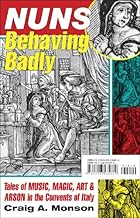 I plan to follow this up with his newest book, Divas in the Convent: Nuns, Music and Defiance in Seventeenth-Century Italy.
I read Colm Tóibín's All a Novelist Neeeds: Colm Tóibín on Henry James (which was in part what inspired me to pick up more James). His new book, The Testament of Mary, is on my list for 2013. I've just seen that it's going to Broadway (it was originally written as a monologue for theater), so I may need to plan a trip to NYC in the spring!
FICTION
I discovered some new (to me) authors this year.
Where has Anthony Trollope been all my life? Why didn't anyone tell me? It all started with The Way We Live Now, which I later learned is often considered his best book. Figures I'd start at the top! But I can't say "it was all downhill from there", because it wasn't. I did the Barchester Chronicles (not in order, but that didn't seem to matter a great deal), and a couple of "stand-alones". One of my goals for 2013 is to read the Palliser novels.
Another author new to me this year is Stewart O'Nan, who, unlike Trollope, writes about ordinary, working-class people, and does so beautifully. I had picked up a copy of Last Night at the Lobster at the Association of Writers & Writing Programs conference here back in January. It's set in a fast-food restaurant on its last night in business, which may not sound the most promising setting for a novel, but I was enthralled. Then I found The Odds: a love story, about a couple ready to divorce for financial reasons, and making one last throw of the dice (literally) at a Niagara Falls casino. Really fine work.
Among the best I found were the Irish writer, John McGahern (Amongst Women), Carlo Lucarelli's detective stories, set in Italy at the end of WWII, and Amara Lakhous, an Algerian-born author now resident in Italy (we read his Divorzio all'islamica a viale Marconi in my Italian lit class).
I did not neglect old friends, though. I read more Henry James and Wilkie Collins, as well as Alessandro Baricco's Senza Sangue, James M. Cain's posthumously published The Cocktail Waitress. There were new books by Donna Leon, Andrea Camilleri, and Sandra Cisneros, among others. Of course, the new book that I was most excited about was Hilary Mantel's Bring up the Bodies, the second in her trilogy about Thomas Cromwell. The Man Booker people liked it, too, because she won the prize for this one, just as she did for the first, Wolf Hall. And well-deserved, too, if you ask me.
NON-FICTION
As usual, my non-fiction reading was all over the map, but, also as usual, it was heavy on biographies, memoirs and history. One of my absolute favorites was Robert Rodi's Bitch In a Bonnet: Reclaiming Jane Austen From the Stiffs, the Snobs, the Simps and the Saps, an absolutely delightfully snarky work of lit crit.
Even before the news that Richard III's body may have been found (and if you don't know about that - where've you been? - you can read more at one of my new favorite websites, The History Blog), I read a couple of older books about him, Clements R. Markham's Richard III: His Life & Character Reviewed in the Light of recent research
and Horace Walpole's Historic Doubts on the Life and Reign of Richard III. I anxiously await the results of the DNA testing, but I'm pretty convinced by the circumstantial evidence that they have, indeed, found Richard's body.
I was fascinated by Craig Monson's Nuns Behaving Badly: Tales of Music, Art and Arson in the Convents of Italy. It has a delightfully tabloid cover, too:
I plan to follow this up with his newest book, Divas in the Convent: Nuns, Music and Defiance in Seventeenth-Century Italy. I read Colm Tóibín's All a Novelist Neeeds: Colm Tóibín on Henry James (which was in part what inspired me to pick up more James). His new book, The Testament of Mary, is on my list for 2013. I've just seen that it's going to Broadway (it was originally written as a monologue for theater), so I may need to plan a trip to NYC in the spring!
Tuesday, January 1, 2013
A new Seminary Co-op Bookstore
For 50 years, the Seminary Co-op Bookstore could be found through the doors of the Chicago Theological Seminary:
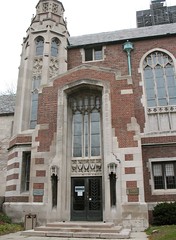
You went down a steep flight of stone stairs, from whence you emerged into a labyrinth of bookshelves, small rooms darting off the main ones unexpectedly, nooks and crannies, wherein you might trip over a fellow book lover, luring you to your wallet's doom. If you were tall and unaware, you might whack your head on a low-hanging pipe. And yet for 50 years, the store, with all its flaws, was beloved. Indeed, for many, those flaws were a large part of its charm.
But then the Chicago school of economics, mother of many a Nobel laureate, reared its (to many, ugly) head, and the Becker Friedman Institute for Research in Economics was born, took over CTS' building, CTS moved to a brand new facility, and Seminary Co-op's days in the building which gave it its name were numbered.
This being Hyde Park, neither the creation of the Friedman Institute, nor the building of the new CTS, nor Seminary Co-op's move, went without opposition. Friedman, ever controversial, ought not to have his name in academic lights. The University ought not to use their land, which had been lent for a community garden, to stage the building of the new theological seminary. And Seminary Co-op? Above ground? With natural light? What of those niches where one might hunker down and lose oneself in some esoteric tome? What would happen to the ambience?
Not to worry. Hire this guy:

Stanley Tigerman is not merely a major American architect; for decades, he has been a member of Seminary Co-op (as is the President of the United States). So he knew what to do. And he did it. The new store, in renovated space at McGiffert House, next door to Frank Lloyd Wright's Robie House, retains the feel of the old stand. You may sometimes still feel the need for Ariadne's ball of twine, or trip over a student ensconced in a pile of books. The exposed pipes are still there, though high enough that one must be very tall indeed to whack one's head. But there is light now, and space. The claustrophobic bibliophile need no longer fight the battle between fear of small spaces and love of book browsing and buying. And, by no means the least improvement, the person with disabilities is no longer required to call and be escorted down a freight elevator. One of the delightful new touches are the bookcase "windows". As one browses a shelf, one can peer through to shelves and temptations beyond:
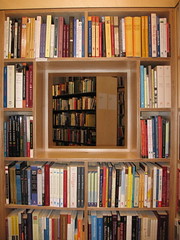
Tigerman has married Gothic ambience with 21st-century practicality, and it's a match made in heaven.
Of course, the move could not be made without some slight fanfare. One of my favorite things about Seminary Co-op is the Front Table, home to recent scholarly titles. To have your book on the Front Table has been described by one person as "The Pinnacle of Academic Achievement". The new store would not be complete without one. So two days before the actual opening, there was a parade! Authors of books on the Front Table were invited to come to the doors of the old location and carry their books to the new one. And many did, led by a bagpiper:
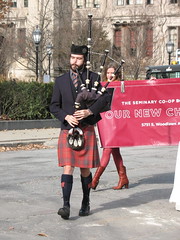
Short speeches were then made, cookies eaten and hot drinks imbibed, and tours given of the new space. I browsed taking note of a few titles for my return trip when they would be officially open and ready to take my credit card. I did, in fact, trip over a student in one of those nooks. And I shared a chuckle over some of the signage:
Blake, I couldn't agree more:
Please visit The Seminary Co-Op Documentary Project.
You went down a steep flight of stone stairs, from whence you emerged into a labyrinth of bookshelves, small rooms darting off the main ones unexpectedly, nooks and crannies, wherein you might trip over a fellow book lover, luring you to your wallet's doom. If you were tall and unaware, you might whack your head on a low-hanging pipe. And yet for 50 years, the store, with all its flaws, was beloved. Indeed, for many, those flaws were a large part of its charm.
But then the Chicago school of economics, mother of many a Nobel laureate, reared its (to many, ugly) head, and the Becker Friedman Institute for Research in Economics was born, took over CTS' building, CTS moved to a brand new facility, and Seminary Co-op's days in the building which gave it its name were numbered.
This being Hyde Park, neither the creation of the Friedman Institute, nor the building of the new CTS, nor Seminary Co-op's move, went without opposition. Friedman, ever controversial, ought not to have his name in academic lights. The University ought not to use their land, which had been lent for a community garden, to stage the building of the new theological seminary. And Seminary Co-op? Above ground? With natural light? What of those niches where one might hunker down and lose oneself in some esoteric tome? What would happen to the ambience?
Not to worry. Hire this guy:
Stanley Tigerman is not merely a major American architect; for decades, he has been a member of Seminary Co-op (as is the President of the United States). So he knew what to do. And he did it. The new store, in renovated space at McGiffert House, next door to Frank Lloyd Wright's Robie House, retains the feel of the old stand. You may sometimes still feel the need for Ariadne's ball of twine, or trip over a student ensconced in a pile of books. The exposed pipes are still there, though high enough that one must be very tall indeed to whack one's head. But there is light now, and space. The claustrophobic bibliophile need no longer fight the battle between fear of small spaces and love of book browsing and buying. And, by no means the least improvement, the person with disabilities is no longer required to call and be escorted down a freight elevator. One of the delightful new touches are the bookcase "windows". As one browses a shelf, one can peer through to shelves and temptations beyond:
Tigerman has married Gothic ambience with 21st-century practicality, and it's a match made in heaven.
Of course, the move could not be made without some slight fanfare. One of my favorite things about Seminary Co-op is the Front Table, home to recent scholarly titles. To have your book on the Front Table has been described by one person as "The Pinnacle of Academic Achievement". The new store would not be complete without one. So two days before the actual opening, there was a parade! Authors of books on the Front Table were invited to come to the doors of the old location and carry their books to the new one. And many did, led by a bagpiper:
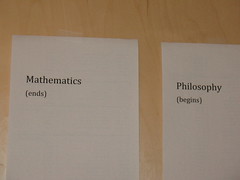
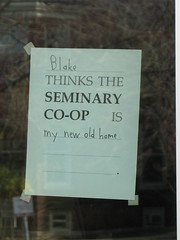
Short speeches were then made, cookies eaten and hot drinks imbibed, and tours given of the new space. I browsed taking note of a few titles for my return trip when they would be officially open and ready to take my credit card. I did, in fact, trip over a student in one of those nooks. And I shared a chuckle over some of the signage:
Blake, I couldn't agree more:
Please visit The Seminary Co-Op Documentary Project.
Subscribe to:
Posts (Atom)